Audi Water Pump Replacement in Seattle
Across the Audi A3, A4, Q5, and many more models, the prolific 2.0L turbocharged engine is present, running efficiently and making significant power. Since the early 2010s, this engine design has been re-designed and refined by VW and Audi, making it better and better with each iteration. Regardless, some issues still occur, and one that is more common than the rest is a failure of the water pump. Read on to learn more, and maybe the extra knowledge will lead to even more confident and content Audi ownership!
How the Audi Water Pump Differs
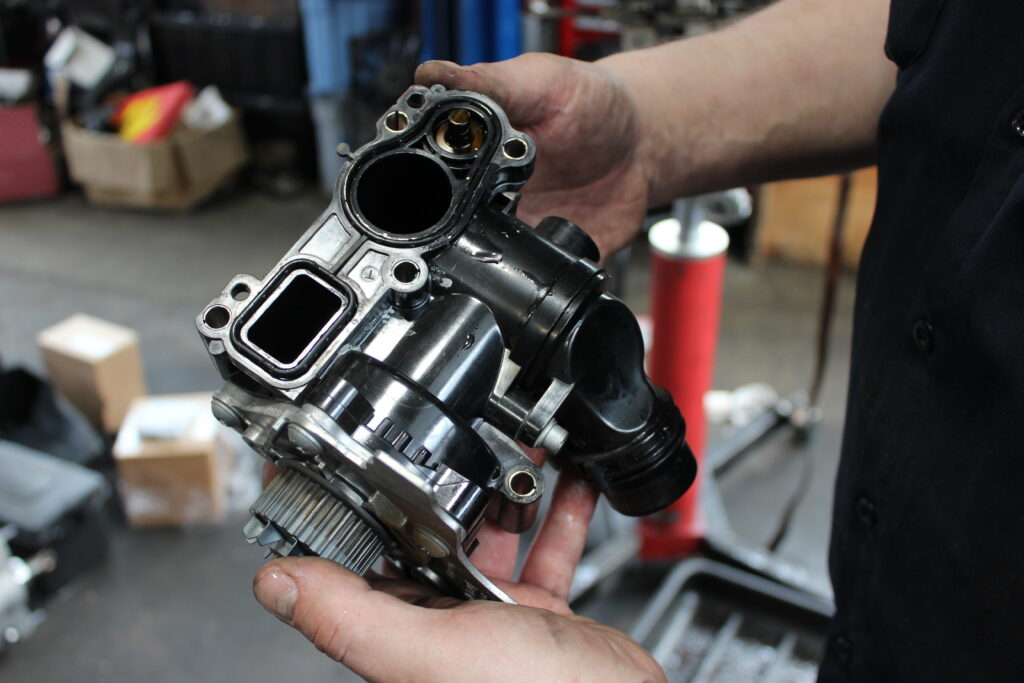
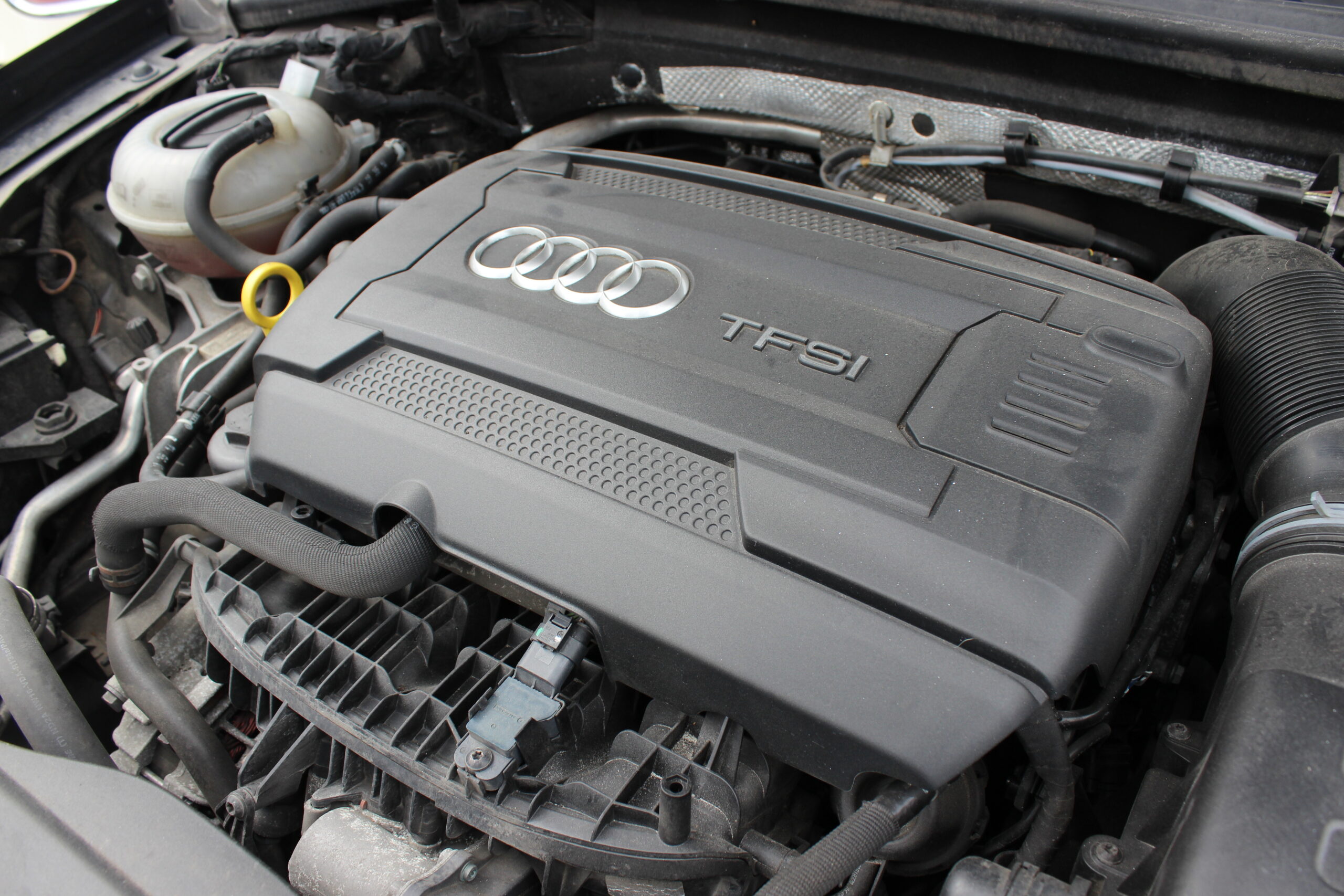
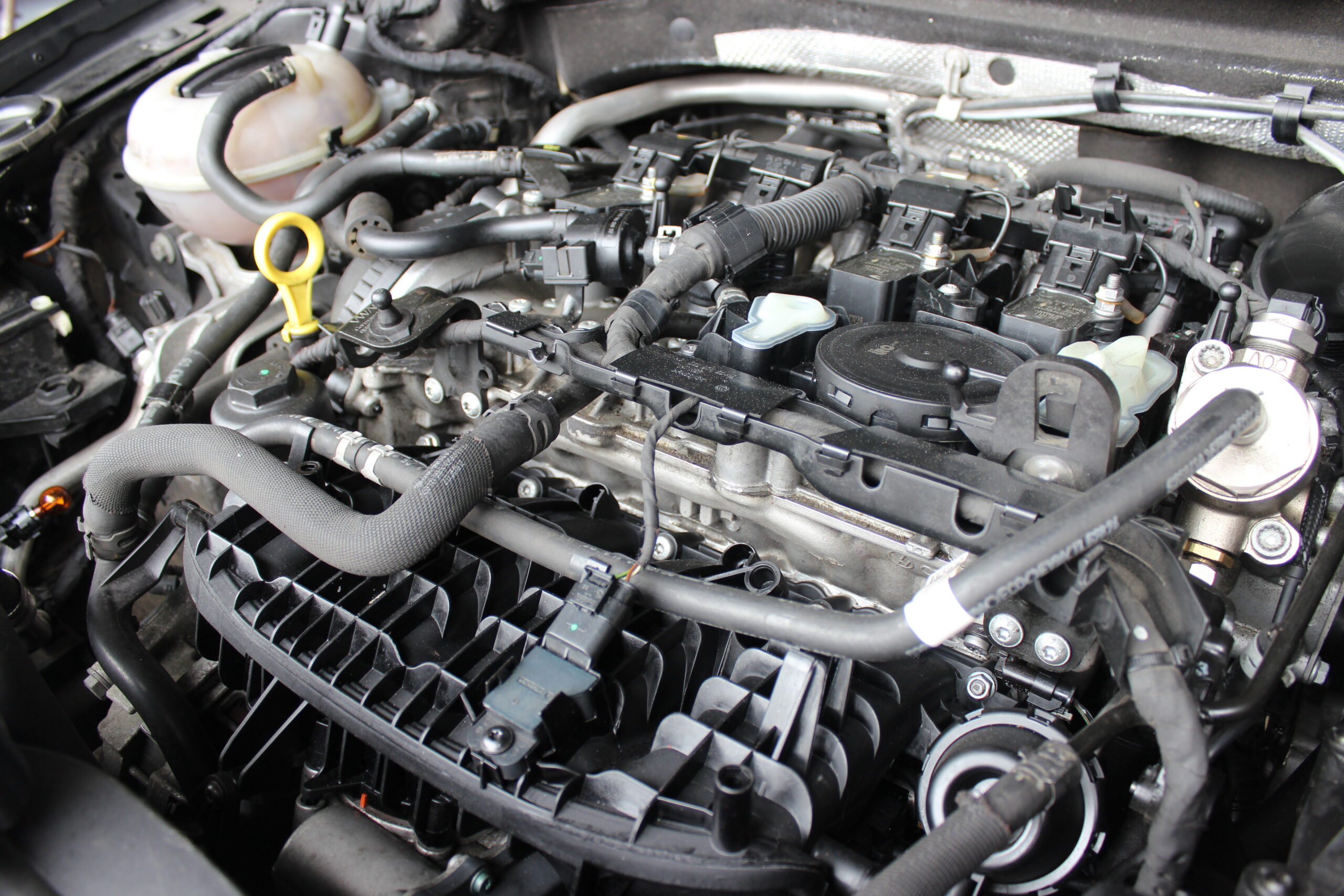
During the design process of the 2.0L turbocharged engine (2.0T), Audi decided to part from the traditional belt-driven water pump approach. Most other VW and Audi engines have the water pump driven by the timing belt or accessory drive belt, but the 2.0T water pump is packaged as an assembly with the thermostat which together is mounted on the intake side of the engine block. A belt is still involved in this process for the spinning aspect of the pump, but it is a much smaller, toothed belt which is spun by an engine balance shaft. The water pump still operated functionally the same as any other design, sucking coolant in through its impeller and pushing it through the whole cooling system to properly circulate the fluid through the engine. Due to this unusual design, those unfamiliar with the 2.0T water pump may miss some of the common issues these assemblies face. Precision Motorworks in Seattle has a team of trained VW and Audi specialists who understand the cooling systems of the 2.0L turbocharged well and can advise on what repairs are necessary as issues arise.
Common Audi Water Pump Failure Points
If you have ever seen a low coolant warning on your Audi or have seen pink fluid on the ground, it might not be a surprise to learn that the most common type of failure on the 2.0T water pump assembly is coolant leakage. The combined water pump/thermostat housing design utilizes a plastic-like composite, which is bolted directly to the cast iron engine block using a rubber gasket to seal the mating surface. The composite housing has benefits for weight, heat management, and production cost savings, though as you might imagine, plastic is not the most durable or long-lasting material. After several years of heat cycles many miles-worth of coolant flowing through the engine, the housing and its gasket warp and crack, resulting in coolant leakage
Due to their combined design in this engine, the other most common area of failure in the water pump assembly is the thermostat. While the water pump pumps coolant as the name implies, the thermostat operates more-so as a valve which opens and closes depending on coolant temperature, allowing or not allowing coolant to flow through the engine as necessary. Common thermostat failure is a sticking symptom, where the thermostat sticks either in the open position — allowing constant coolant flow and preventing the engine from reaching full operating temperature — or in the closed position, where the coolant does not flow at all and the engine overheats. Given the inclusion of temperature sensors in the water pump/thermostat housing, most thermostat failures will trigger fault codes which then throw a “Check Engine” light onto the dashboard. The thermostat is technically serviceable as a stand-alone repair, but best practice on the Audi 2.0T engine is to replace the thermostat and water pump together as a complete assembly.
Less common, but certainly a documented failure, is mechanical failure of the water pump itself. If you notice a rotational humming noise from the engine that seems to correlate with engine RPM, the water pump failing. As mentioned earlier, the water pump uses a spinning impeller to force coolant through the engine. Over many thousands of spin cycles, the impeller wears down and can become noisy and inefficient. If any of these symptoms of leakage, check engine light, or odd noise are present on your Audi, give Precision Motorworks a call.
Call the Experts at Precision Motorworks
As you can see, the 2.0L turbocharged engine, despite its many refining redesigns, still can have quite a few issues in the cooling system. Whatever model Audi you drive, and for whatever engine you may have, Precision Motorworks in Seattle has the experts. Our team has the specialized Audi & VW tools and the many years of expertise to ensure your Audi is properly inspected, diagnosed, serviced, and repaired. Call us today to schedule your visit!