
Jaguar Turbocharger Replacement in Seattle
If you are the owner of a 4-cylinder Jaguar, you may have noticed the vehicle is luxurious, zippy, and not half bad when it comes to MPGs and fuel efficiency. This is because Jaguar models like the F-Type, XE, XF, and F-PACE models with the turbocharged 4-cylinder engine have a special design which lends itself to efficiency and performance, and it all starts at the exhaust manifold. Curious to learn more? Precision Motorworks has you covered with an informative article on the fascinating and unique engineering of these Jaguar motors and, specifically, the pros and cons of their turbocharger systems.
What is a Turbocharger?
A turbocharger is a forced-induction device that uses exhaust gas to help the engine make more power. In normal turbo systems, as exhaust gasses leave the engine, they travel through the exhaust manifold and piping to the turbocharger, where an impeller internal to the turbo sits, thus being spun by the exhaust gas flow. That impeller is connected by a shaft to a compressor wheel on the intake side. As the compressor spins, it forces more air into the engine.
More air allows the engine to burn fuel more efficiently and produce more power. This is how a 4-cylinder Jaguar engine can provide the acceleration and drivability expected from a luxury vehicle without needing a larger V6 or V8 engine.
How Jaguar Turbo Systems are Different
The turbocharger setup on Jaguar 4-cylinder engines is different from a standard, traditional design because the turbocharger and exhaust manifold are integrated as one assembly. The exhaust manifold on any vehicle is the component that collects newly created exhaust gases from the engine’s cylinders after combustion and directs them away from the engine and out towards the tailpipe. In the Jaguar system, these exhaust gasses are instead first directed straight from the cylinders after combustion toward the turbocharger, reducing the common turbo downside known as “turbo-lag” and at the same time are reducing engine space for better efficiency.
The downside of this unique design is that heat, vibration, exhaust pressure, and age all affect the entire assembly. If the exhaust manifold cracks from these forces, or if the turbocharger fails, the entire turbo/manifold assembly needs to be replaced. This is one reason the repair can be expensive and why proper diagnosis is important before replacing parts.
Common Failure Points & Symptoms
The most common issue with the combined turbocharger and exhaust manifold design is cracking and leaking of the manifold. The manifold is exposed to repeated heating and cooling cycles every time the vehicle is driven and, over time, metal expansion and contraction can lead to cracking and exhaust leakage.
One thing you do not expect to smell in your Jaguar is probably the odor of exhaust gasses. If the manifold is cracked, this might be a smell you notice in the cabin. The smell can also be coupled with a hissing or whistling noise, smoke from the exhaust, rough running, poor fuel economy, or inconsistent acceleration.
Another frequent issue is failure of the turbocharger itself. This can occur due to oil starvation, oil leakage, carbon buildup, excessive impeller play, or a faulty wastegate. Oil feed and return issues are especially important because the turbo depends on a steady supply of clean oil. If the oil is dirty, restricted, or otherwise poor, the turbocharger bearings can wear rapidly.
If you hear a rattling noise from the engine area, especially during acceleration, deceleration, or startup, the turbocharger side of the assembly may be failing. Turbocharger failure can also present as a check engine light for boost problems, such as underboost or overboost. As well, since the turbocharger is responsible for building boost pressure and bumping up horsepower, a failing turbo can make the vehicle feel sluggish like it is lacking in power.
These symptoms should not be ignored. Your Jaguar may still be drivable even with symptoms present but continued driving can result in a domino effect of failures, which – as one can assume – gets fairly expensive.
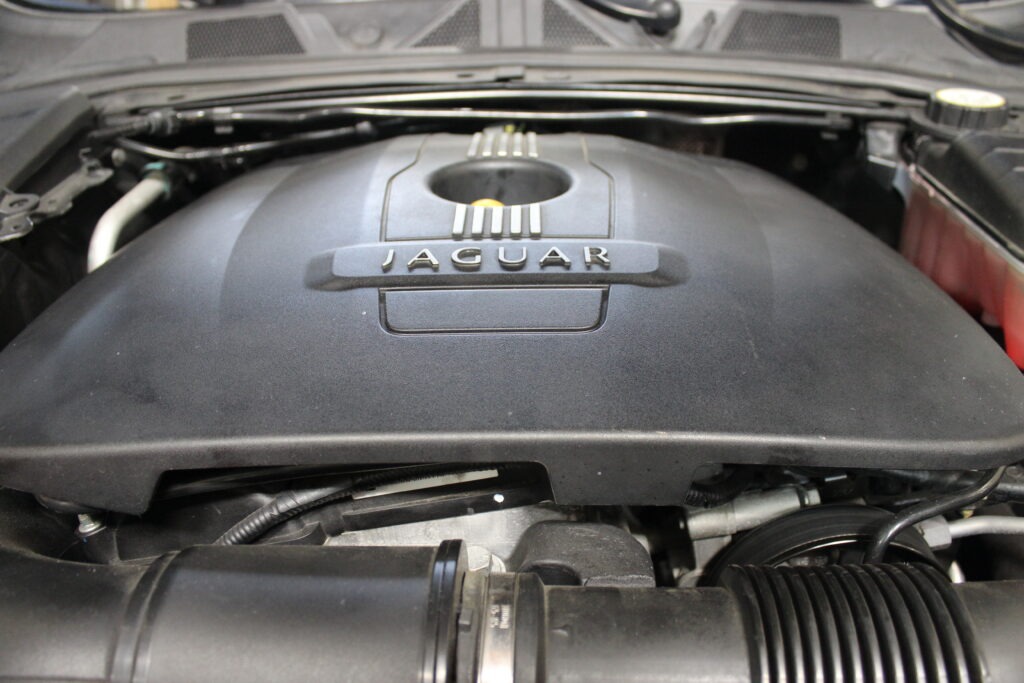
Schedule Your Jaguar Turbo Inspection Today
At Precision Motorworks in Seattle, our trained technicians understand the unique service needs of Jaguar. The unique turbocharged 4-cylinder engines require careful diagnosis, proper repair procedures, and technicians who have seen it all. Do not hesitate if you notice symptoms of a failing exhaust manifold or turbocharger, your Jaguar is worth the prompt response and swift action needed to resolve the problems the right way!
If your F-Type, XE, XF, and F-PACE, or other Jaguar model has a rattle, check engine light, reduced power warning, turbo noise, exhaust smell, smoke, poor acceleration, or any other unusual condition, don’t wait and bring it straight to Precision Motorworks for inspection. Our knowledgeable team will determine the problem, advise the right repair, and get you fixed up and ready to tackle your driving needs before you know it.
Call or text Precision Motorworks today to schedule turbocharger and exhaust manifold inspection and service for your Jaguar.

Seattle’s Independent Jaguar
Repair & Service
Call or Text:
206-282-1000
Email us at:
service@precisionmotorworks.net